
Making Friends Through a Niseko Winter: Where Newcomers Meet People, and How Not to Get Isolated (2026-27)
Niseko Hub Editorial Team · 2026/11/08
Your first winter here, you may suddenly realise you haven't had a real conversation with a neighbour in days, and in Niseko and Kutchan, that's more common than you'd think. The places to meet people are closer than they look, though: the neighbourhood association and community-centre classes, your kids' daycare and school, a weekly lesson or the gym or the public bath, and the shop where the staff start to know your face. Winter, with its deep snow and short days, pulls you indoors, but getting out just a little more often changes how the months until spring feel. If you want the bigger picture of settling in without stumbling, read what to decide before you move so housing, work, winter and money don't catch you out first, and this piece will sit more clearly in place.
Why the first winter leaves people isolated
Kutchan's winter starts getting dark in the early afternoon, and on a snowy day just stepping outside is a job in itself. The day disappears between work and home, your days off go to shovelling, and quietly the only thing that shrinks is your chances to chat with anyone. When you've just arrived you know few people, and if your language skills worry you it is worse. Unless you make the first move, a whole week can pass without a word to anyone. So treat winter as a season where connections won't grow on their own: pick one place to go each week and put it in your calendar as a fixed plan. Finishing your winter prep early also matters, so you have the energy left to go out, and the running order is in what to get ready before the first snow.
Where to go to meet people
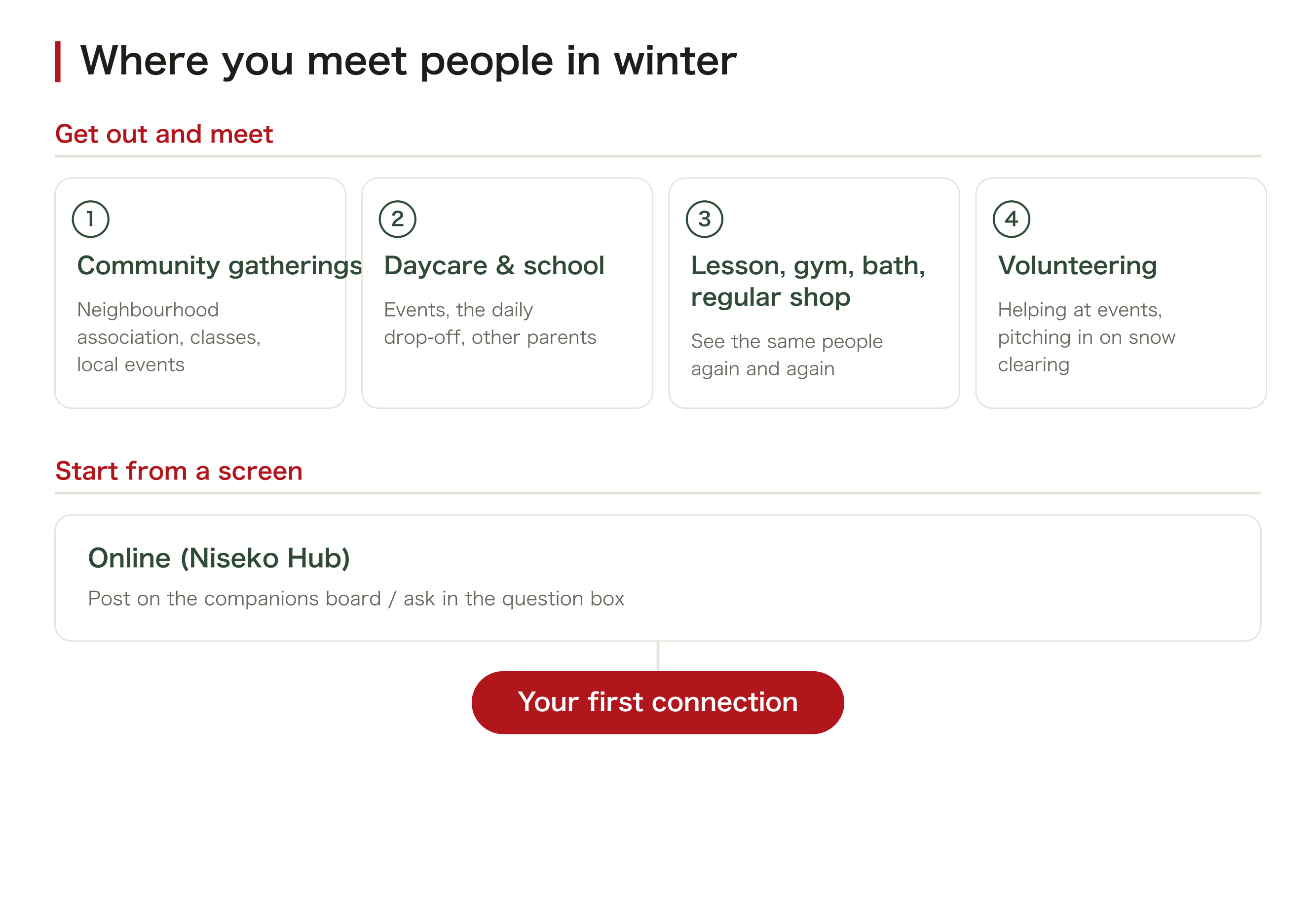
The places to meet people split roughly into ones where you get out and meet in person, and ones that start from a screen. Meeting in person builds a bond faster, but if diving straight out into the cold feels like too much, it's fine to make contact online first and then go meet. What matters is picking one doorway you can keep using without strain.
Community gatherings, daycare and school
The most rooted connections come from the neighbourhood association, community-centre classes, and local festivals and events. The association puts you face to face naturally through the circulating noticeboard and rubbish-duty rota, so joining keeps you loosely connected all winter. Community-centre and class settings gather the same people at the same hour, which makes it easy to learn each other's faces. If you have children, their school and daycare events and the daily drop-off are the shortest route of all, since other parents live nearby and have kids the same age, so small talk keeps going on its own. Check what classes and events are open through your local ward office or community centre, and start by showing up once to whatever catches your eye.
A lesson, the gym, the public bath, a regular shop
A weekly lesson or the gym, the public bath you use, the shop you always go to: these are real places to meet people too. Their strength is that you see the same people again and again. Showing up on the same day each week gets your face known faster than any one-off event does. When I was on a working-holiday in Melbourne I was the one whose language skills were shaky, so I know this painfully well: if you keep turning up, the staff start recognising your face and calling out to you first. You don't have to force a conversation; just pick one place and keep going back, small and steady, on the same day.
Volunteering, and starting online (companions and the question box)
Volunteering, whether helping at a local event or pitching in on snow clearing, begins with a "thank you", which makes it easy to step into even if you're shy. And when you can't find the push to get outside, you can start from a screen. On Niseko Hub's companions and wanted board you can post to find someone to ski with or share a hobby, and in the Niseko question box locals answer everyday questions about life here. Both are lighter than meeting a stranger face to face in an unfamiliar place, so use them as the doorway to that first connection.
The language barrier starts with a greeting and the rubbish
Even if you only speak English, building relationships still works. What you need first isn't fluent conversation; it is a morning greeting and following the rubbish rules. Someone who sorts the rubbish correctly and puts it out on the right day gets accepted by the neighbours as a person who's trying, even if their words come out halting. Skip the greeting and break the rules, and the distance stays even if the language is perfect. The everyday manners that keep life friendly here are in everyday community manners: street drinking, rubbish, noise and snow, so start there if the rubbish worries you. A short greeting, and a willingness to follow the rules: those two carry in any language.
How to keep it going, and the first step
Connections grow more from keeping it small and steady than from one big burst of effort. It usually takes a few visits before people know your face, so if one visit falls flat, go back to the same place another two or three times. For a first step, when you go to the ward office for your move-in paperwork, pick up the notices about local gatherings and classes while you're there. The running order for the paperwork itself is in the 14-day paperwork after you move in. Some mornings you'll be out front digging your doorway clear of snow and your neighbour will be doing the same, and a simple "morning" across the driveway is sometimes how the first connection starts.
A local tip: winter tends to drag your mood down, so don't put pressure on yourself to "make friends". Get one person you know, and that person will bring along another. Start with just one familiar face.
FAQ
I've just moved and know no one. Where do I start in winter?
Pick one place you can go to each week, and that is the easiest start. A lesson, the gym, the public bath or a regular shop let you see the same people repeatedly, so your face gets known quickly. If getting out feels like too much, it's fine to make contact first through Niseko Hub's companions board or question box, then go meet in person.
Can I fit into the community without speaking Japanese?
Yes. What you need is less fluent conversation than a morning greeting and following the rubbish rules. A visible effort to follow the rules carries even when your words are halting, and the neighbours take you in. If the rubbish sorting worries you, read the everyday community manners article first.
I don't have children. Can I still connect with the community?
You can. The neighbourhood association, community-centre classes, local events and volunteering are all open whether or not you have kids. The association, where you meet people naturally through the noticeboard and rubbish rota, is a doorway that keeps you loosely connected all winter.
I went once but didn't fit in.
One flat visit is normal. It takes a few times before people know your face, so go back to the same place another two or three times. If it still isn't right, just switch to a different doorway, with no need to force yourself to stay in one place.
— Niseko Hub Editorial Team
Niseko Snow Letter (weekly, free)
Snow conditions, this week’s events and when to book your stay — every week.
Unsubscribe anytime. Privacy policy