
Entertainment
Kutchan Shrine in Depth: The Rare Shrine That Enshrines Abe no Hirafu — Eleven Deities, Founding, Grand Festival, Yakko and Mount Yotei
Niseko Hub Editorial Team · 2026/10/12
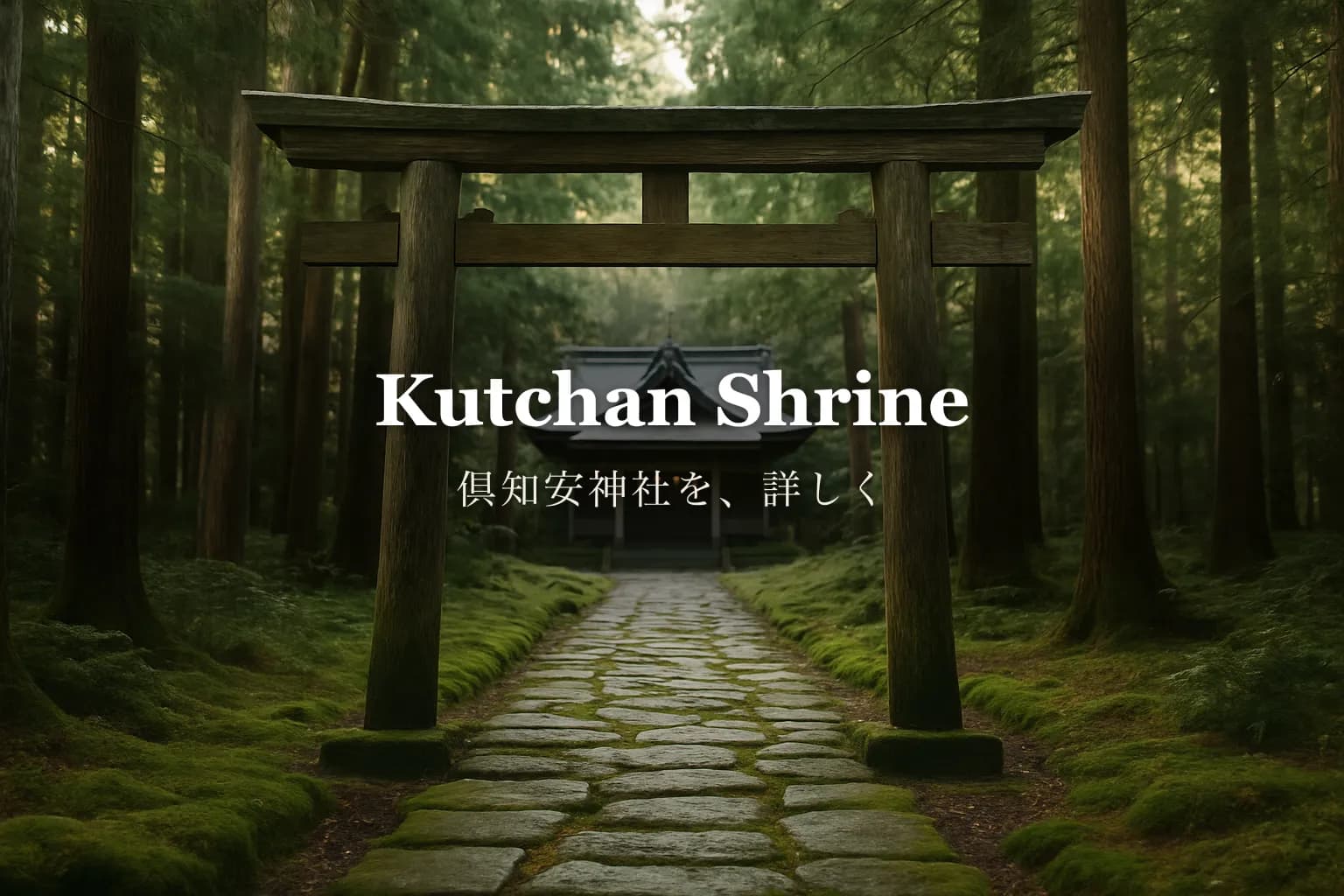
Kutchan Shrine is the chief guardian shrine of Kutchan Town, standing in a district of the town called Hachiman. It began in 1896, when settlers enshrined the god of Hachiman as a guardian of the land they were opening, and today it enshrines eleven deities. One of them is Abe no Hirafu, a general of the Asuka period, and that is what makes this shrine unusual. Shrines that enshrine a historical person exist across Japan, but shrines that enshrine Abe no Hirafu can be counted on one hand nationwide.
This article reflects the situation as of 8 October 2026. Festival dates and rites can change from year to year, so check the latest with the shrine or the Hokkaido Shrine Agency. The link between Abe no Hirafu, who gave the shrine part of its story, and the place name Hirafu comes into fuller view when you read this alongside where the name of this land comes from. Here we walk through Kutchan Shrine itself, from the story of its founding to its deities, its grand festival, and the practicalities of visiting today.
What kind of shrine is Kutchan Shrine: Hachiman and eleven deities
At the centre of Kutchan Shrine is Homudawake no Mikoto. This is another name for Emperor Ojin, the fifteenth emperor, long loved across Japan as Hachiman. The district name Hachiman itself comes from the shrine enshrining this Hachiman deity. Hachiman was worshipped first as a god of war and later as a god who watches over people's daily lives more broadly. Shrines dedicated to Hachiman are said to be among the most numerous in Japan, reaching from Hokkaido in the north to Kyushu in the south. In the age of the warrior he was a guardian in battle, and in peaceful times a god to petition for good harvests and the safety of the home. That a settlement on newly opened land first welcomed Hachiman came, most likely, from the plain wish to be protected in an unfamiliar place.
What the shrine enshrines today is this Homudawake no Mikoto as the principal deity, together with eleven deities in all. By the records of the Hokkaido Shrine Agency, they are Homudawake no Mikoto, the general Abe no Hirafu, Amaterasu Omikami, Oyamatsumi no Kami, Ukemochi no Kami, Sugawara no Michizane, Okuninushi no Mikoto, Kotoshironushi no Kami, Ame no Uzume no Mikoto, Oyamakui no Kami, and Tamahime Inari no Okami. A god of the opening of the land, a general who crossed the sea, the god of the heavens, the god of mountains, the god of food, the god of learning: deities for many parts of daily life are gathered in one hall. With so many gods present, a visitor can bring to mind the deity closest to their own wish as they join their hands. One person prays for a tie, another for study, another for the safety of a business. A single shrine has taken in the wishes of many kinds of people living in the town.
A shrine holding this many gods is not unusual in Hokkaido. Many shrines on land opened by settlers brought together, over time, deities that had first been enshrined separately. Kutchan Shrine, too, set out from Hachiman alone and, over long years, welcomed deities in answer to the town's wishes.
The story of its founding: the opening of the Kutchan plain and Iwashimizu Hachimangu
Kutchan Shrine traces its beginning to 2 April 1896. The people who settled on what was then called the Kutchan plain gathered to seek a guardian for their new life. By the record of the Hokkaido Shrine Agency, settlers including Nuibe Kanejiro, Mandai Sataro, Yamamoto Yasujiro and Yamamoto Yahei took the lead and invited a divided spirit of Homudawake no Mikoto from Iwashimizu Hachimangu in Kyoto.
Iwashimizu Hachimangu, standing south of Kyoto, is one of the most prominent Hachiman shrines in Japan. That a distant settlement in the north received its divided spirit shows how seriously the settlers prayed for the safety and the harvest of the land. At first the deity was enshrined in a small wayside shrine at a place called Buitausu, present-day Toyooka. In those early years of settlement there was no grand hall. A small shrine held the Hachiman deity brought from far away. That was the starting point. The Kutchan plain was once a land of deep forest and marsh. The settlers cut trees, pulled roots, and opened fields one plot at a time while contending with the snow. Summers were short and winters long. On such land, whether the seed sown in spring would bear fruit could decide the year's living. Welcoming Hachiman was an act of faith, and at the same time a way to give the townspeople a shared centre to hold on to.
That same September the deity was moved to the present site at Hachiman, and in January 1897 the shrine was formally approved. On land so recently settled, people raised their own shrine with their own hands. The history of Kutchan Shrine overlaps with the history of Kutchan's own opening. On this land, buried deep in snow each winter, a place to pray for the spring harvest and the safety of family took shape, one step at a time.
From village shrine to district shrine: growing as the town's shrine
The shrine that began as a small wayside hall rose in rank as the town grew. In 1918 it was raised to a village shrine, and in 1922 to a district shrine. Village shrine and district shrine are names from the prewar system of shrine ranks. A village shrine was the guardian of its village, a district shrine one that drew together a somewhat wider area. Rising from village to district shrine in so short a span tells how Kutchan grew in population as a central town of Shiribeshi, and how the shrine became a support for that many more people. The Hachiman deity, welcomed as a guardian of the opening, had become the centre of the whole town's festival and prayer. The ranks were abolished after the war, but the path from village to district shrine is one sign of how greatly Kutchan grew within a few decades of its opening. As people increased, fields spread and trade grew, the shrine too became a place that received that many more prayers.
Why Abe no Hirafu is enshrined: the Nihon Shoki and "Shiribeshi"
What sets Kutchan Shrine apart from others, above all, is that it enshrines the general Abe no Hirafu. This dates to 1942, when the stone grand torii was rebuilt and the general Abe no Hirafu was added as a founding deity of the opening of Shiribeshi.
The reason reaches back to a line in the Nihon Shoki, the old chronicle compiled over a thousand years ago. The Nihon Shoki records that in the reign of Empress Saimei, Abe no Hirafu led a fleet north across the sea. The entry for 659 says, in effect, that Hirafu placed a government seat at a place called Shiribeshi (written with the old characters read Shiribeshi) and appointed officials to govern the land. This old Shiribeshi is thought to be the origin of today's regional name, Shiribeshi.
In other words, Kutchan Shrine welcomed Abe no Hirafu from the wish to enshrine, as a founding deity of the opening, the general who might be called the namer of the land of Shiribeshi. Whether the general's expedition actually reached the foot of Mount Yotei is not clearly known. That part belongs to long-told story rather than hard record. The people the Nihon Shoki names as Hirafu's opponents, the Mishihase, are thought to have lived along the northern seas. Hirafu is also recorded presenting two live brown bears and seventy of their pelts to the court, a faint glimpse of the northern country of that time. Hirafu later took part as a commander in the Battle of Hakusukinoe on the Korean peninsula. Exactly where "Shiribeshi" points is a question on which scholars differ. Even so, it is certain that it has long been told as the origin of the regional name Shiribeshi.
Shrines that enshrine a historical figure as a god are many across Japan, from the Tenmangu shrines that enshrine the god of learning Sugawara no Michizane to shrines that enshrine warlords. A shrine that enshrines the ancient general Abe no Hirafu, however, is a rare case. Kutchan Shrine enshrines this general not merely out of respect for a great person, but for a reason rooted in the land: to receive, as a founding deity of the opening, the person from whom the land took its name. A general from over a thousand years ago and the prayers of settlers from the Meiji era are joined inside a single shrine. This layering of time makes Kutchan Shrine more than just the town's shrine.
The eleven deities, one by one
The eleven deities of Kutchan Shrine each have their own field of connection. Knowing which gods are present before you visit can change how you join your hands.
The principal deity, Homudawake no Mikoto (Emperor Ojin, Hachiman), is a god of war and a god who watches broadly over the country and people's lives. The general Abe no Hirafu is an ancient warrior who sailed north, enshrined as a founding deity of the opening of Shiribeshi. Amaterasu Omikami is the sun goddess, at the centre of the Japanese gods. Oyamatsumi no Kami governs the mountains, a fitting deity for a land that has Mount Yotei. Ukemochi no Kami is the god of food and harvest. For a settlement, a god who guards the ripening of crops was as important as anything.
Sugawara no Michizane, known as the god of learning, is turned to for examinations and study. Okuninushi no Mikoto and Kotoshironushi no Kami are deities of matchmaking, trade and the making of the land. Ame no Uzume no Mikoto is handed down as a deity connected with the performing arts and with opening a way forward. Oyamakui no Kami is a god of the mountains and of brewing. Tamahime Inari no Okami, as an Inari deity, has been worshipped for prosperity in business and the protection of the home.
Set out like this, you can see that this one shrine covers almost every wish of daily life. A town that began from the opening of the land added to this shrine, little by little, the things needed to live: work, study, ties, health, harvest. The number eleven is that accumulation itself.
Together with Ezo-Fuji, Mount Yotei: the subordinate shrine of Mount Yotei
You cannot speak of the town of Kutchan without Mount Yotei. Called Ezo-Fuji for its clean conical shape, the mountain can be seen from anywhere in town and has long been a landmark and a support for people's hearts.
In the grounds of Kutchan Shrine stands a subordinate shrine that enshrines this mountain, the Ezo-Fuji Mount Yotei Shrine. Its deities are Oyamatsumi no Kami, Okuninushi no Kami and Toyotamahime no Mikoto. The feeling of revering a mountain itself as a god belongs to the mountain worship found across Japan. Mount Yotei is also known for the fine water that springs at its foot, such as the Fukidashi springs, and that water has supported life and farming. Gratitude for the water and the harvest the mountain brings lies behind the worship of the mountain as a god. The grand festival of Mount Yotei Shrine is held each year on 12 September. There is more on enjoying Mount Yotei itself in the guide to climbing Mount Yotei.
The grand festival of Kutchan Shrine: three days in late July and the portable shrine
The greatest festival of Kutchan Shrine is the grand summer festival. The festival day is 28 July, and the festival runs over three days, from 27 to 29 July. For a land deep in snow, the summer festival is the most radiant time of the year.
The first day, the 27th, is the eve festival, held the night before the main event, with rites in preparation for the days to come. The second day, the 28th, is the main festival and the first day of the portable shrine procession, as the mikoshi bearing the deity goes around the town of the parishioners. The third day, the 29th, is the departure rite from the resting place and the second day of the procession.
The shrine's auxiliary hall, the tongu, is part of this festival too. The tongu is a subordinate shrine outside the main grounds, enshrining Homudawake no Mikoto, Okuninushi no Kami and Kotoshironushi no Kami. During the procession it serves as the resting place where the deity stays for a time. The portable shrine winds through the town's streets while people along the way receive it. For three days the town turns wholly to the festival. On festival days, stalls line the approach and the streets, and children's laughter rings out. As if to savour the short summer night, people follow the mikoshi and listen to the festival music. Because they know the winter that closes the land in snow, the brightness of the summer festival carries a special meaning here. For people who have faced the snow all winter, these few summer days are a special time to reward a year's labour.
The Kutchan Akasaka Yakko: the town's first intangible folk cultural property
You cannot speak of Kutchan Shrine's grand festival without the Kutchan Akasaka Yakko. This is a time-honoured festival performance, designated on 1 July 1985 as the first intangible folk cultural property of Kutchan Town.
A yakko was an attendant in the daimyo processions of the Edo period, who walked at the front carrying the implements. The stylised movements of that procession came to be called yakkofuri, handed down in festivals across the country. Advancing with a feathered spear or a chest in hand, using the whole body, the figures lend dignity to a festival procession. The Kutchan Akasaka Yakko belongs to this tradition of yakkofuri and leads the portable shrine procession of the grand festival with its stately movements. That such a performance is protected as the town's first intangible folk cultural property shows how much the people of Kutchan have valued this festival. The sight of the mikoshi and the Akasaka yakko advancing along the street is one of the images that stand for summer in Kutchan. The movements of the yakko are not something you can do at a glance. The step of the feet, the turn of the body, even the handling of the implements are passed from senior to junior over time. Each festival a younger generation joins and their elders support them, and it is that cycle that has kept the festival going for more than a hundred years. By passing the movements from generation to generation, the festival becomes not mere liveliness but the memory of the town itself.
Kutchan Shrine and the town's year
Kutchan Shrine is not a shrine of the summer grand festival alone. For the townspeople it is a place to visit at each turning point of the year. When the year opens it fills with first-of-the-year worshippers, and at the setsubun of February the bean-throwing is held. In spring comes the prayer festival for the year's harvest. At the autumn harvest festival, thanks are offered for the crops gathered in. And the year is closed with the New Year's Eve rite.
When a child is born there is the first shrine visit, and at the shichi-go-san children in bright clothes visit the grounds with their families. In the examination season, more people come to join their hands before the god of learning, Sugawara no Michizane. The shrine welcomed as a guardian of the opening became, in time, a place that stays close to the turning points of a person's whole life. There is another face to the Kutchan famous for tourism, and it is here in the grove of Hachiman.
Fire and rebuilding, and one hundred and thirty years since enshrinement
Over its long history, Kutchan Shrine has known great trials. On 5 November 1965 the main hall burned down completely. The loss of the hall that had received the town's prayers since the opening must have been a heavy blow for the people of the town.
Even so, the shrine rose again. In 1966 the name was changed to its present form, Kutchan Shrine, and in 1973 the hall was rebuilt. The rebuilding after the fire was supported by the offerings and strength of the townspeople. Even after loss, to build again: the spirit of the opening runs through the shrine's history too. After that, Kutchan Shrine marked each milestone with a great festival. On 16 December 1995 it held its 100th anniversary of enshrinement, and on 8 November 2015 its 120th. Counting from the founding in 1896, the shrine reached its 130th anniversary of enshrinement in 2025. For well over a century, a single shrine has remained together with the town. That weight seeps into the air of the grounds.
Visiting in practice: access, the yearly rites, goshuin and blessings
Finally, here are some pointers for an actual visit. Kutchan Shrine stands at 476 Hachiman, Kutchan Town, Abuta District. By public transport, take a Donan bus from Kutchan Station on the JR Hakodate Main Line and get off at Kutchan Jinja-mae, right by the shrine. It is about eight minutes from the station by bus.
Through the year, the shrine holds many rites. It begins with the New Year's rite on 1 January, then the setsubun rite on 3 February, the prayer festival on 3 May, the grand festival on 27 to 29 July, the grand festival of the subordinate Mount Yotei Shrine on 12 September, the harvest festival on 23 November, and the New Year's Eve rite on 31 December. Around the first visit of the year and the shichi-go-san, the grounds fill with local people.
With eleven deities, the blessings told of are wide-ranging too. Matchmaking and love, study and passing examinations, fortune in money and prosperity in business, long life and recovery from illness, safe childbirth and the gift of children, warding off misfortune, safety in traffic, safety in the home, luck in contests, and a rich harvest: for almost every wish of daily life there is a deity to match. As a memento of a visit you can receive a goshuin, a shrine seal. The goshuin is written directly into a seal book, and it is noted that there are no seasonal limited versions and no postal service. A first-time visitor can remember this flow: a light bow before the torii, purifying the hands and mouth at the water pavilion, and then on to the hall. The basic form of worship is two bows, two claps, and a last bow. There is no need to be bound too tightly by form, but joining your hands with feeling makes the visit deeper. If the manners, or Japanese shrine culture itself, interest you, the guide to Japanese culture is a help.
Kutchan is known for skiing and resorts, but at its centre a shrine stands quietly, having received the prayers of the opening and a thousand years of story. Looking up at Mount Yotei, make your way once to the grove of Hachiman.
FAQ
Where is Kutchan Shrine?
It is at 476 Hachiman, Kutchan Town, Abuta District. From Kutchan Station it is about eight minutes by Donan bus, getting off at Kutchan Jinja-mae, right by the shrine.
How many deities are enshrined?
Eleven. The principal deity is Hachiman (Homudawake no Mikoto), and the shrine also enshrines the general Abe no Hirafu, Amaterasu Omikami, Oyamatsumi no Kami, Ukemochi no Kami, Sugawara no Michizane, Okuninushi no Mikoto, Kotoshironushi no Kami, Ame no Uzume no Mikoto, Oyamakui no Kami and Tamahime Inari no Okami.
When is the grand festival?
The festival day is 28 July, and the festival runs the three days from 27 to 29 July. The portable shrine procession and the movements of the Kutchan Akasaka Yakko, an intangible folk cultural property, are the highlights.
Why is Abe no Hirafu enshrined?
He was added in 1942 as a founding deity of the opening of Shiribeshi. The reason given is that the Nihon Shoki records Abe no Hirafu placing a district office at "Shiribeshi." Shrines that enshrine Abe no Hirafu are rare across the country.
Can I receive a goshuin?
Yes. It is written directly into a seal book. It is noted that there are no seasonal limited goshuin and no postal service.
If you want to know more about the names and the history of this land, read on from here.
— Niseko Hub Editorial Team