
Entertainment
If You Get Hurt or Lost in the Niseko Backcountry: Rescue Costs and How to Prepare
Niseko Hub Editorial Team · 2026/06/16
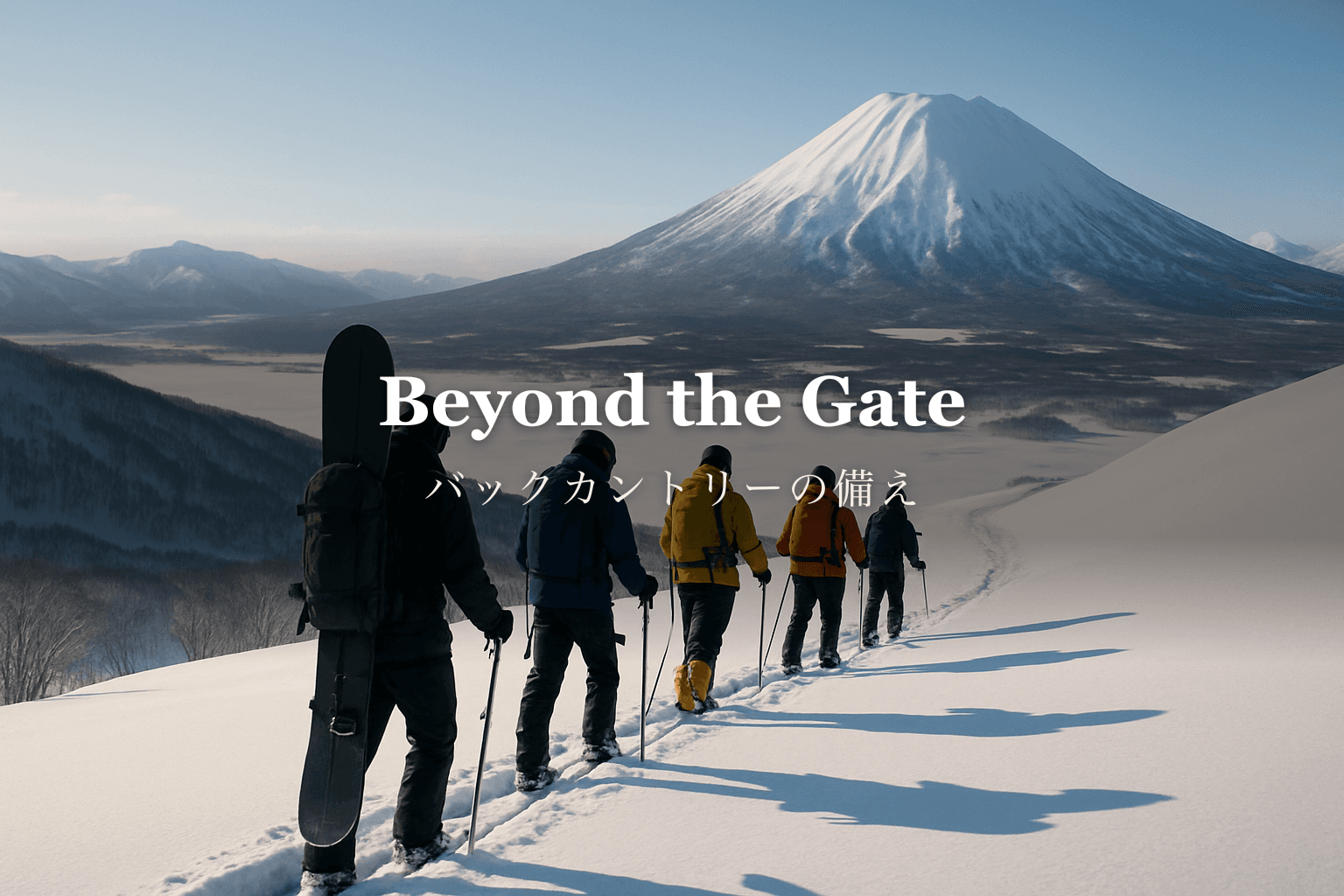
Niseko's deep powder is a dream for skiers around the world. Beyond the marked runs — the backcountry — lies a freedom you can't find inside the resort.
But one step past that boundary is a different world. Avalanches, getting lost, injury. And, if the worst happens, the cost of rescue.
This article lays out the risks, the money, and how to prepare — a little geeky, but honestly. Not to scare you. Once you understand how it works and prepare properly, you can enjoy it with peace of mind.
- Why avalanches happen in Niseko
- The "15-minute wall" if you're buried
- What to do to rescue someone caught in a slide
- How much a rescue costs
- The blind spots in health and travel insurance, and how to cover them
- The Niseko Rules, an important promise
Let's go through it step by step.
First, the basics: inside and outside the course are different worlds
Inside the ski area, patrol keeps watch and avalanche risk is managed. If you're hurt, patrol moves for you right away.
Outside the course — the backcountry — is a world of personal responsibility. Avalanches are a real danger, and help doesn't come quickly. Same Niseko snow, but inside and outside are nothing alike. That line is where everything starts.
Why do avalanches happen in Niseko?
The very thing that makes Niseko's powder — light, dry snow piling up almost every day — is also what sets the stage for avalanches.
When light snow stacks up, a poorly bonded "weak layer" can form between the layers. Add fresh snow on top, and a small trigger can send the whole upper slab sliding. This is the slab avalanche that backcountry skiers fear most.
Wind plays its part too. Wind-blown snow packs hard on the lee side of a slope (a wind slab), often hiding a weak layer beneath. Steep slopes — over about 30 degrees — call for the most caution.
Heavy snowfall, and snow that's light: the very charm of Niseko sits back-to-back with avalanche risk. (For why Niseko gets this powder, see this article.)
The 15-minute wall: if you're buried, it's a race against time
If you're ever caught and buried, the outcome is decided in a startlingly short time.
A buried person's chance of survival drops sharply after about 15 minutes. In one body of research, it's around 80 percent if you're dug out within 15 to 20 minutes — and falls to roughly 30 percent by 35 minutes.
The most common cause of death in an avalanche is asphyxiation. If there's an air pocket around your mouth, you can breathe for a while. But as time passes, oxygen runs low and the carbon dioxide you breathe out builds up, and it gets harder and harder. That's exactly why how fast you're dug out is everything.
Here's the crucial fact: a helicopter can't make it in time. By the time one is called and arrives, those 15 minutes are long gone.
So the people who save a life are the friends right there with you. This is called companion rescue.
If an avalanche happens in front of you: the rescue steps
Witness an avalanche, and your mind tends to go blank. That's exactly why knowing the sequence gives you strength.
- First, secure your own safety. Look up the slope and check there's no risk of a second slide
- Mark the spot where the person was last seen — it's the starting point for the search
- Count how many are missing, and call 110 (police) or 119
- Everyone switches their beacon to "search" mode and follows the signal. Once you've narrowed it down, pinpoint the burial with a probe
- Then dig, several of you sharing the work. Once you reach them, clear the snow from around the mouth and nose first, and check for breathing
With training, locating someone by beacon can take as little as five minutes — and if you can dig them out in the time that's left, the odds rise sharply.
Gear: the three essentials, and the avalanche airbag
The backcountry "three essentials" are a beacon, a shovel, and a probe. Search, pinpoint, dig out — only with all three can you save a companion.
And in recent years, one more reassuring piece of gear has spread: the avalanche airbag (a backpack with a built-in airbag). Pull the handle and a balloon inflates, helping your body stay near the surface and lowering the risk of full burial. Some reports put the survival rate when worn in the 90-percent range, and say it roughly halves the death rate in large avalanches.
But no gear means anything if you only own it. Practice working the beacon and digging with the shovel before you head out. That, more than anything, is what keeps you alive.
How much does a rescue cost?
"Ambulances are free in Japan." That's true — but only down in town. Search and rescue in the mountains is a different story.
Roughly speaking:
- Rescue by public agencies such as police and fire is, in principle, free (funded by taxes)
- But if a private helicopter is dispatched, it can run 400,000–500,000 yen an hour, and 500,000–800,000 yen depending on the situation
- If a private rescue team searches, it's tens of thousands of yen per member per day. On a large scale, it can top a million yen
And public searches may be called off after several days to a week. After that, they switch to paid private searches at the family's request. The longer it drags on, the more the cost swells.
The easily missed blind spots in health and travel insurance
This is the most misunderstood part.
Both National Health Insurance and overseas travel insurance cover the cost of treating an injury. But the cost of search and rescue in the mountains is, in most cases, not covered. Treatment may be paid for, but the helicopter and the rescue team are separate.
Travel insurance has one more catch. Skiing on regular runs may be covered, while off the course (off-piste, backcountry) can be treated differently, as a "dangerous sport." It may require a declaration, or be excluded entirely. Make sure your policy covers backcountry skiing and search-and-rescue costs.
How to prepare: mountain insurance and COCOHELI
There are two main ways to prepare for search and rescue costs.
- Mountain insurance: insurance that covers search and rescue costs in a mountain emergency. Usually an annual contract, with varying coverage amounts. Check before signing up whether backcountry skiing and snowboarding are included
- COCOHELI: a membership search service. You carry a small transmitter, and if something happens, a dedicated helicopter and receiver locate you for rescue. Membership runs around 5,500 yen a year and supports search and rescue costs up to 5.5 million yen. Notably, it operates independently of the police
Mountain insurance prepares you with money; COCOHELI prepares you with a way to be found. Plenty of people carry both. Terms change, so check each provider's official site for the latest.
The Niseko Rules, an important promise
Niseko has the "Niseko Rules," made to protect both those heading out of bounds and every other user. A few of the promises to keep:
- To leave the course, always go through a gate. Ducking under ropes to get out is prohibited
- Gates are closed on days when avalanche or other risks are high. When they're closed, don't go out
- The three valleys of Yunosawa, Mizuno-no-sawa and Haru-no-taki are off-limits. Entering them means your lift pass is confiscated
- A helmet and an avalanche beacon are considered the minimum equipment
Each day's avalanche danger is published on the official Niseko Avalanche Information. Always read it before you head out.
Your pre-departure checklist
Finally, gear and mindset, all in one place.
✅ Beacon, shovel, probe — and practice using them / helmet / check the avalanche info / don't go alone / take a guided tour if unsure / sign up for mountain insurance or COCOHELI
For your first backcountry trip, starting with a guided tour is the safest choice. With someone who knows the terrain and the snow inside out, you cut the risk dramatically.
Prepare, so you can enjoy it
The backcountry isn't something to fear. Understand how it works, follow the rules, and prepare properly — do that, and Niseko's wild side becomes a playground like no other.
Preparation is the wing that lets you ride free. The snow, the money, the gear and the rules. Get them in order, then head for Niseko's powder.
For the basics of getting sick or hurt, this article covers more. Take a look too.
— Niseko Hub Editorial Team