
Jobs
The Complete Niseko Working Holiday Guide #4: Working While You Ride
Niseko Hub Editorial Team · 2026/06/15
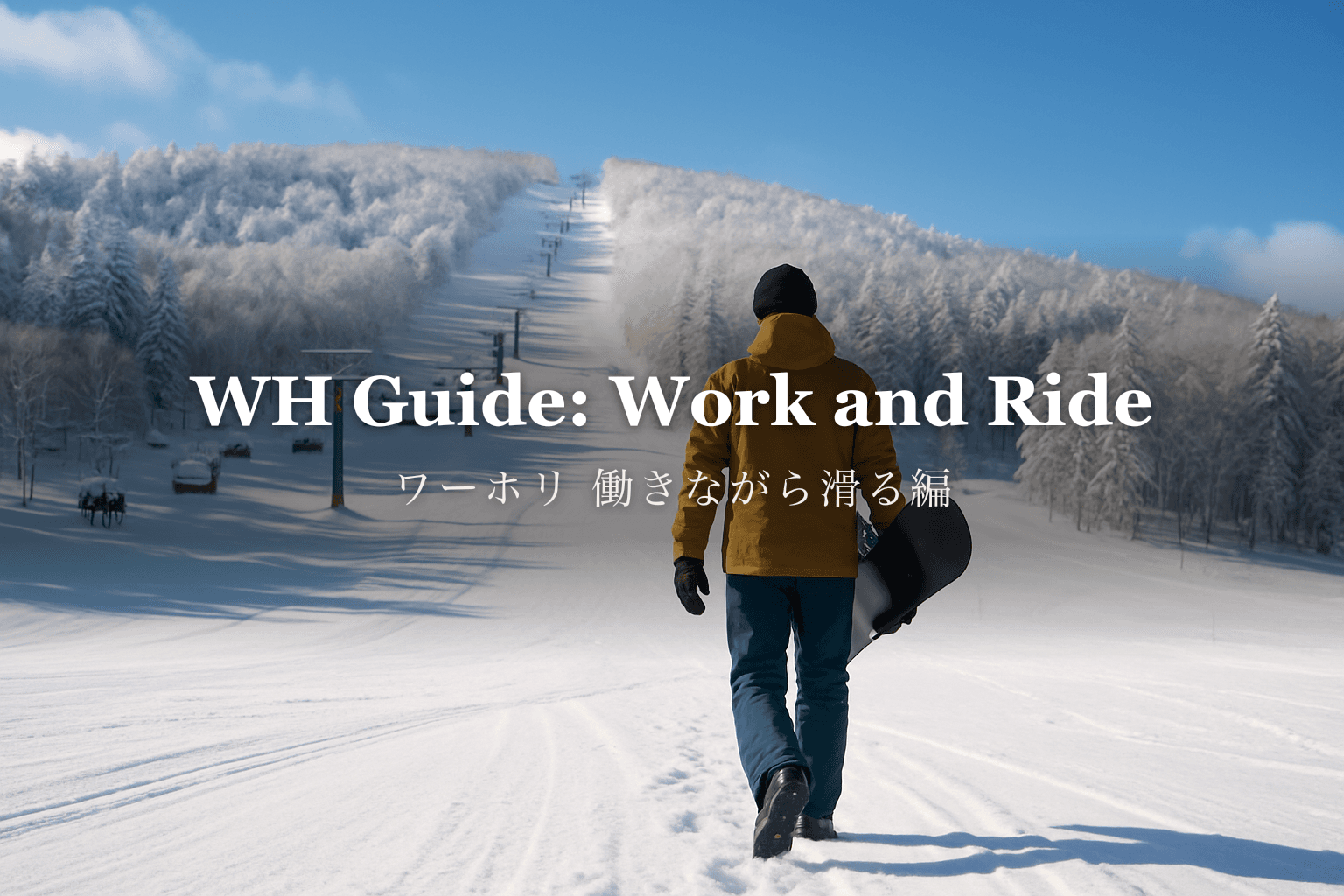
Everyone has their own reason for coming to Niseko. But for many working holidayers, the number one goal is, of course, to ride.
And yet the most common regret you'll hear is: "I worked the whole time and barely got to ride at all." The key to avoiding that lies in how you choose your job, and in understanding how shifts work.
This article gathers the mindset for working hard and still riding plenty.
- Understand shifts, and you can carve out time to ride
- A rough guide to Niseko jobs and pay
- Points that often trip people up in a Japanese workplace
- How to live so you maximize your time on snow
Let's go in order.
You can make time to ride: the key is the "split shift"
Jobs around the ski areas often use a split shift — you work in the morning, have a few hours free midday, then work again from the evening. That gap in the middle is when you go ride.
Your workplace and dorm are right by the slopes, so slipping out for a few runs between shifts and then heading back to work is genuinely doable.
When you apply, it's reassuring to ask about these:
✅ Whether shifts are split or straight-through / how much time to ride you'll get per week / whether a season pass is provided or discounted / the distance from your dorm to the slopes
Whether a job is one you can actually ride around comes down largely to confirming these before you sign.
Niseko jobs and pay: know the rough figures
Niseko's seasonal jobs are varied — hotels, restaurants, cafés, lifts, rentals, housekeeping. English speakers in particular are welcomed in customer-facing roles.
As a rough guide, pay is around ¥1,300–1,800 per hour, at roughly 35–40 hours a week. On top of that, many jobs make your season pass free or discounted, and subsidize dorm rent and meals.
So the trick to choosing a Niseko job is to weigh not just the headline hourly wage, but the "can-I-ride" environment and the living subsidies together.
Japanese workplace culture: know it, and you won't be thrown
What counts as "normal" at work differs by country. Here's what often surprises people first in a Japanese workplace:
- Punctuality: arriving comfortably before your start time is the norm
- Report, inform, consult: before acting on your own judgment when stuck, give someone a heads-up first
- Polite customer service: language and manner toward guests are taken seriously
- Working as a team: even when your own task is done, you may pitch in around you
None of it is hard to settle into once you're used to it. Even if it feels strange at first, you'll be fine learning one "ah, this is how it's done in Japan" at a time.
Too much of an English bubble? If you want to grow your Japanese
Niseko is an international town that draws people from all over the world. Plenty of jobs let you work entirely in English — so you'll often hear the happy complaint, "I came to Japan but my Japanese isn't improving."
If you want to grow your Japanese, choose a workplace with more Japanese staff, try speaking a little on your breaks, and show up where locals gather. Small steps like these add up.
Maximizing your time on snow: how to spend your days off
Days off are days to ride your heart out. Being able to pick your mountain by the day's weather and mood is the real joy of Niseko.
Which area has what kind of snow and crowds is laid out in our Niseko 4-Area Comparison Guide. Use it as a reference for powder mornings and for days you want to dodge the crowds.
If you keep your gear at the dorm, you can dash out for a quick session between shifts too. The more time you spend riding, the faster you improve.
So you don't wear yourself down
The season is long, and working in the snow takes more out of you than you'd expect.
If the urge to ride takes over and you keep working and riding with no rest, the fatigue catches up somewhere. Take a full day off now and then. Look after your condition, and enjoy the season all the way to the end.
Working and riding. When you can value both, a Niseko winter becomes something you'll never forget.
Next time: what to do if you get sick or hurt — how to see a doctor, and how insurance works.
— Niseko Hub Editorial Team