
Jobs
The Complete Guide to Finding Seasonal Work in Niseko
Niseko Hub Editorial Team · 2026/05/19
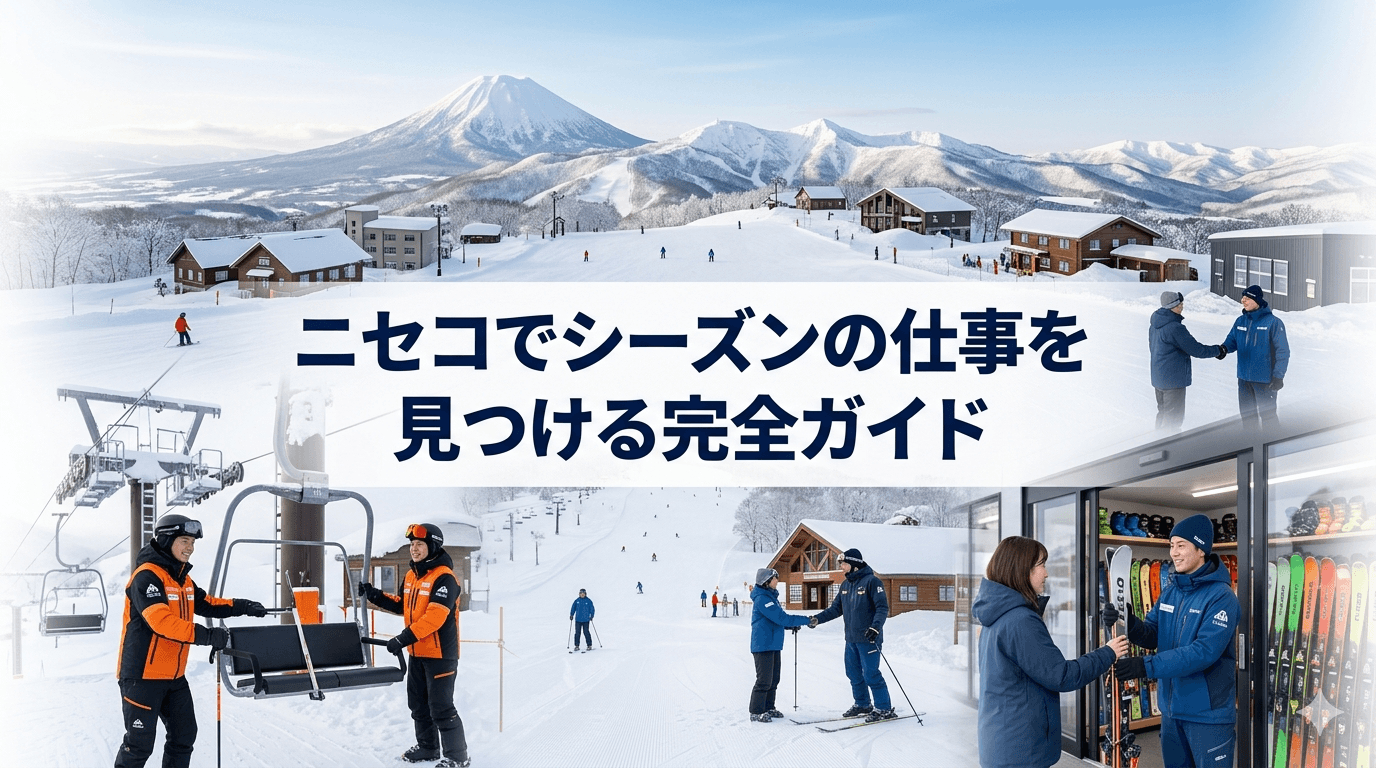
Spending a winter in Niseko while you work — with the right preparation, it can become a few months you'll never forget.
This guide is for anyone looking for winter work in Niseko for the first time. It covers, step by step, how to find listings, how to weigh up a job's conditions, and what to check before you sign.
By the end, it should be clear where to begin.
Each winter, Niseko draws skiers and snowboarders from all over the world. From November to April the area is always short of staff, and workers are genuinely welcome.
Even without experience, there's no need to worry.
What is seasonal work, exactly?
It's fixed-term work that runs only through the resort's busiest winter months. Most contracts run from early December to late March. Some begin in November, others continue into the Golden Week holidays in late April.
It's sometimes called a "resort job" or "live-in work."
There are three main attractions. Earning a solid income in a short time. Working alongside people from all over the world. And skiing the mountain right outside your door on your days off.
Few places in Japan offer all three at once.
What kinds of jobs are there?
- On-mountain roles (lift operator, ski patrol, rental shop, ticket sales)
- Accommodation (hotel and lodge front desk, room cleaning, night staff)
- Restaurants (floor, kitchen, dishwashing, bar)
- Ski and snowboard school instructors
- Shuttle drivers and snow-clearing staff
- Retail shops and convenience stores
If you speak English, customer-facing roles open up a lot, and the pay tends to be higher. But it's fine if you don't.
Kitchen, cleaning, and snow-clearing work relies more on stamina and organisation than on language. A good place to start is to look for roles that suit your own strengths.
Weighing up a job's conditions
When choosing a job, the most important thing is not to decide on the hourly wage alone. "The wage looked high, but less was left over than I expected" — that's something heard almost every year.
When you look at a listing, check these points too:
- Is staff housing provided, and what's the rent? (Utilities included, or separate? Heating runs high in a Hokkaido winter.)
- Is a season lift pass provided? This alone is worth tens of thousands of yen.
- Are meals subsidised?
- Is social and accident insurance available?
- What's the minimum work period? (Some contracts mean leaving your housing if you leave early.)
- Is English required, or simply welcomed?
In the Jobs category on Niseko Hub, you can filter listings by tags like "housing provided," "lift pass included," and "English OK." Working through the conditions that matter most to you makes it easier to find the right one.
How to find work
Start by browsing current openings — from the Niseko Hub home page, or via Classifieds → Jobs. Filter by the conditions that matter to you, and apply directly through the contact details or inquiry form on each listing.
Searching isn't only about waiting.
If nothing quite fits, you can post your own notice in the "Wanted" category — something like "Looking for this kind of work in Niseko." Employers sometimes get in touch after seeing it, so it's well worth a try.
When to start — this matters most
This is the key point. The best jobs — especially those with housing and good conditions — fill up early.
If you want to work the winter season, start gathering information in summer (July to September), and aim to finish applying by October at the latest.
If you're coming from overseas, visas, flights, and insurance all take time. Starting a little earlier will set your mind at ease.
Good listings quietly fill up while it still feels like "there's plenty of time."
Before you sign — take a breath
A last word on contracts.
Never settle employment terms verbally — always confirm them in writing. Pay particular attention to the housing cost, working hours, how overtime is handled, and the terms for leaving mid-season. These four points are where misunderstandings tend to arise later.
Asking about awkward things in advance isn't rude. In fact, those who check carefully tend to earn an honest employer's trust.
Whatever's on your mind, don't hold back — ask early.
A season in Niseko is a special time — working, connecting with the world, living alongside the snow. Prepare well, and make a comfortable start.
Here's to a wonderful season.
— Niseko Hub Editorial Team