
Housing
Putting Down Roots in Niseko — Renting On or Buying a Home
Niseko Hub Editorial Team · 2026/05/31
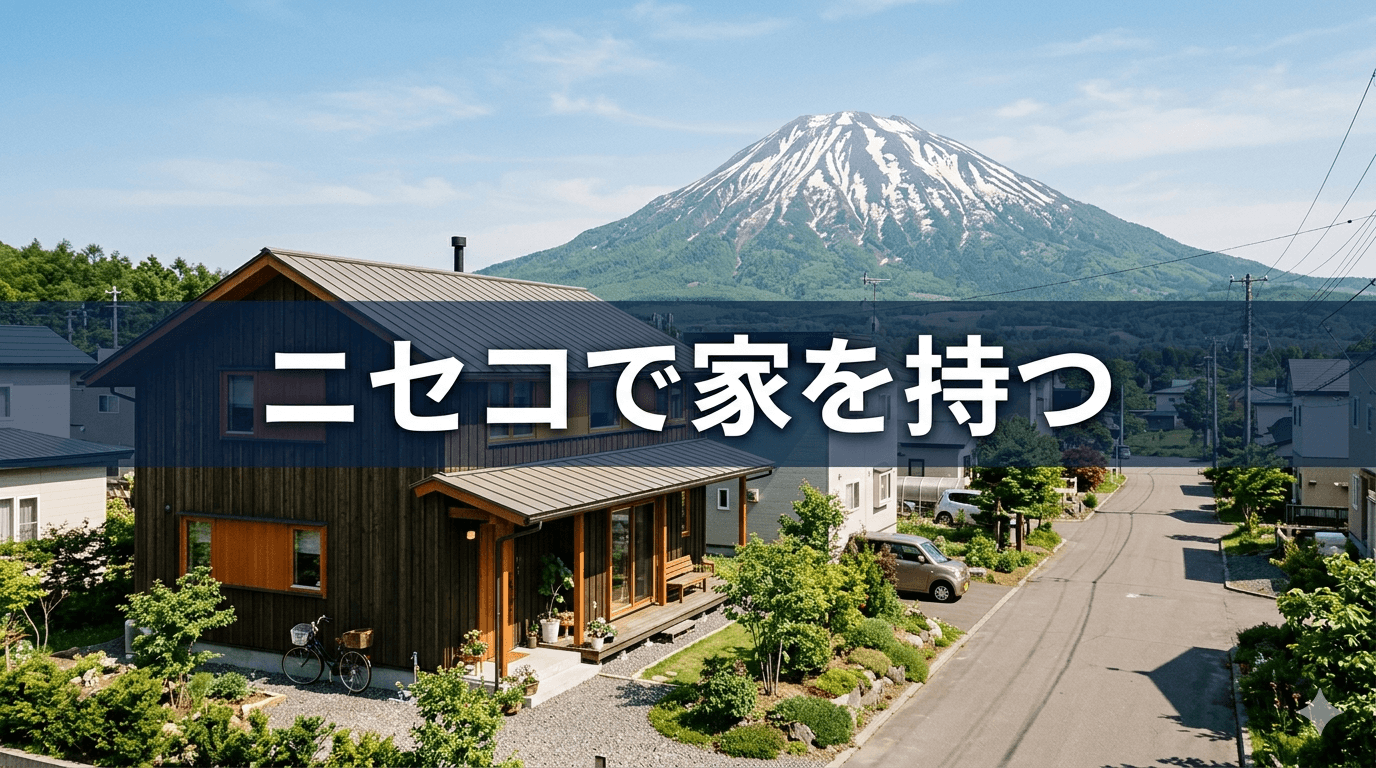
"We're going to be living in Niseko for years to come." Once that feeling settles in, the next thing on your mind is usually your home.
As a seasonal worker, or when you first moved here, a room you could simply rent was enough. But after three or five years, many people start to wonder: is it best to keep renting, or should we own a home? In this guide — for residents thinking about putting down roots in Niseko — we lay out the real picture: how to weigh renting versus buying, the costs of owning, how to choose an area and a property, and ownership for non-Japanese residents.
In Niseko, housing is hardest for those who stay
Let's start with an honest truth.
Housing in the Niseko–Kutchan area has risen sharply in price over the past decade. Global resort demand and second-home and investment money have flowed in, and both land and buildings keep climbing.
Residential land prices in Kutchan rose more than 10% year on year again in 2025. In the Hirafu area, prices reach the ¥180,000-per-square-metre range — far above anywhere else in the town. (Land prices change every year; please check the latest published figures.)
Rentals are no exception. A 2LDK for around ¥250,000 a month — on par with Tokyo — is no longer unusual.
And the tricky part is that money alone doesn't guarantee a place. Vacant homes exist, but owners are often reluctant to rent or sell them, or they're used for higher-yield short-term rentals or staff dormitories — so homes for residents to actually live in long-term rarely reach the open market.
In other words, in Niseko a strange reversal is happening: it's not the tourists or the seasonal workers, but the people who want to put down roots here, who have the hardest time finding a home. That's exactly why it pays to have a strategy early.
Keep renting, or buy? — How to weigh it
So, which is better — renting on, or buying?
The right answer is different for everyone, but these points help you sort it out.
- How many more years you expect to live here. The longer you stay, the more buying enters the picture.
- Your family situation — children's schooling, and how much space you need.
- The funds you have on hand, and whether you can get a loan.
- The stability of your job and residency status, and whether your income outlook is steady.
Roughly speaking, renting keeps you nimble but options are scarce and rents are high; buying takes upfront costs and upkeep but gives you a stable home. Try holding both against your own life.
✅ Before you decide to buy: how many years you expect to stay / your own funds and loan eligibility / yearly costs like property tax / upkeep including snow clearing and heating / the stability of your residency and income. If even one of these worries you, choosing to keep renting is a perfectly sound call too.
The money involved in buying a home
It's not just the price of the home — costs come both "when you buy" and "while you hold it." Let's just grasp the framework here.
Costs when you buy
On top of the property price, there are several taxes and fees.
- Real estate acquisition tax: a one-time tax at purchase. For homes and land, around 3% of the assessed value is a common guide.
- Registration and license tax: a tax on transferring the registered title — roughly 2% of the assessed value.
- Agent fees, judicial scrivener fees, loan-related costs, and so on.
Costs while you hold it
- Property tax: levied each year on the owner as of January 1, at a standard rate of 1.4%. In some areas, a city-planning tax is added too.
- Fire and earthquake insurance, and repairs.
- And, as you'd expect in snow country, the ongoing cost of snow clearing and heating (kerosene and the like).
* Tax rates and fee percentages can change with revisions to the system. For actual estimates and procedures, please consult professionals such as a tax accountant, a judicial scrivener, or a real estate agent.
Where to live? — The reality by area
"Living in Niseko" means very different prices and lifestyles depending on the area.
- Hirafu & Hanazono: the heart of the global resort, at the highest price levels. Heavily oriented toward investment and second homes, and often out of reach as an everyday place to settle.
- Central Kutchan: with supermarkets, hospitals, the town office, and the station, it makes an easy base for daily life — a realistic choice for residents.
- Niseko Town: a calm living environment, popular with families raising children.
- Rankoshi, Kyogoku, and other nearby towns: relatively more affordable, good for those who want a bit more land. Commute distance and snowy roads are worth weighing.
The glamour of the resort and the ease of daily life don't always line up. Compare the distance to work, the amount of snow, and shopping convenience through the eyes of someone who actually lives here.
Property types — land, new builds, used homes, vacant houses
There are several paths to owning a home.
- Buy land and build new: the most freedom, but you need substantial funds for land plus construction. Factor in builders' busy seasons, too.
- Used homes: easier on the budget, though you'll want to check insulation and the condition of fixtures carefully.
- Vacant houses: sometimes cheap to acquire, but renovation costs can mount. With older homes especially, insulation and heating efficiency directly affect comfort and utility bills.
In snow country, it helps to think of a house in terms of its "fuel economy." Good insulation changes your winter kerosene bill, and the shape of the lot and roof affects how easy the snow is to clear.
Non-Japanese residents can own a home, too
Some people worry that you have to be Japanese to buy a home — but there's no need to worry.
In Japan, non-Japanese residents can own real estate. No special residency status is required to own land or a building (owning property and your residency status are separate matters).
That said, if you take out a mortgage, the conditions can vary depending on your residency status, employment, and the like. And if you don't have an address in Japan, you'll need to appoint a "tax agent" to handle tax procedures.
This area is very case-by-case, so it's reassuring to consult a real estate agent experienced with non-Japanese buyers, or a tax accountant or judicial scrivener.
Because you're staying, choose a home you'll be happy with
Owning a home in Niseko isn't easy. Prices are high, options are limited, and there's a lot to think about.
Even so, a home you've chosen with "we're staying here" in mind holds a special value. Don't rush — gather information, lean on the professionals, and choose at your own pace.
You can search for homes in the area here.
— Niseko Hub Editorial Team